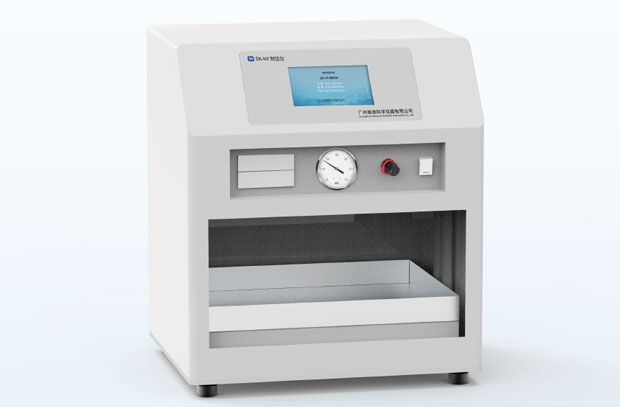
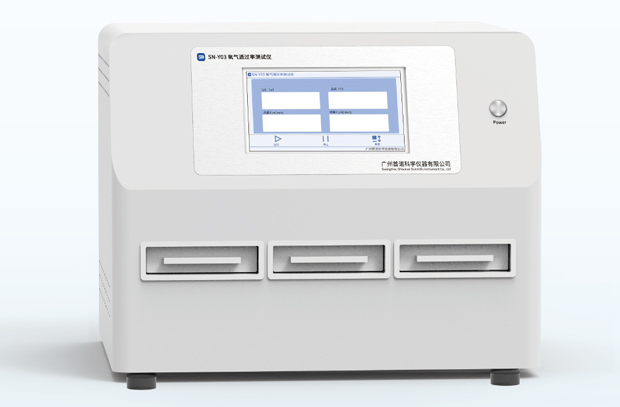
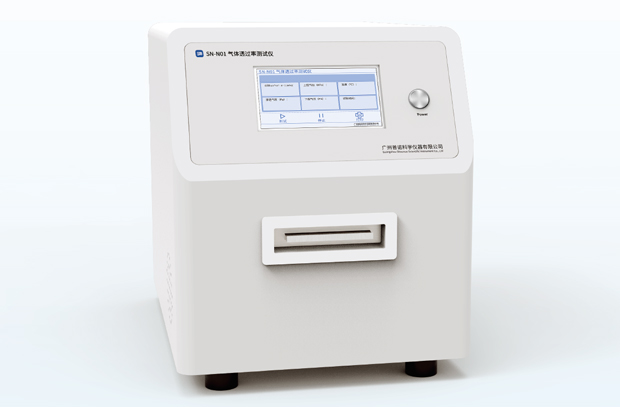
In the packaging, film, pharmaceutical, and new energy industries, a material's gas barrier property is a critical performance indicator. It directly impacts product shelf life, safety, and efficacy. Accurately quantifying this property requires a key instrument: the Gas Transmission Rate Tester (often referred to as a Gas Permeability Tester).
This article explains how this equipment works, its applications, and key selection criteria.
1. What is a Gas Transmission Rate Tester?
A Gas Transmission Rate (GTR) Tester is a precision instrument that measures the permeability of plastic films, sheets, composite materials, paper, and non-wovens to gases like oxygen, nitrogen, and carbon dioxide. The key parameter measured is the Gas Transmission Rate.
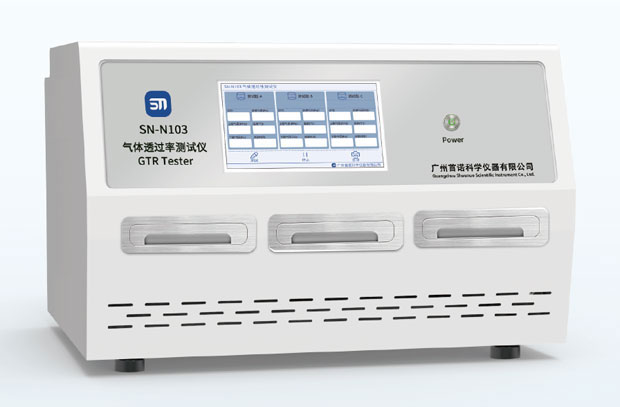
In simple terms, this Gas Permeability Tester answers a essential question: "How much gas passes through a material under specific conditions?" A better barrier material has a lower GTR value.
2. Working Principle: How Does It Measure Permeation?
Mainstream Gas Transmission Rate Testers typically use either the Differential Pressure Method or the Equal Pressure Method (Coulometric Sensor).
-
Differential Pressure Method:
-
The sample is sealed between two chambers. One chamber is filled with high-pressure test gas, the other is a vacuum or low-pressure chamber. The gas permeates through the sample driven by the pressure difference.
-
This is a versatile method used in many standard Gas Permeability Testers.
-
Equal Pressure Method:
-
The pressure on both sides of the sample is equal, but a gas concentration difference exists. The permeating gas is carried to a sensor by a carrier gas for detection.
-
This method offers high sensitivity, especially for oxygen transmission rate (OTR) testing.
3. Key Applications: Why is it Essential?
-
Food Packaging: Ensures materials provide adequate barrier against O? and CO? to prevent spoilage and extend shelf life.
-
Pharmaceutical Packaging: Verifies the high barrier properties of blister packs and pouches to protect drug stability.
-
New Energy & Electronics: Tests barrier films for lithium-ion battery cell packaging and solar panel backsheets.
A reliable Gas Transmission Rate Tester is vital for quality control and R&D in these fields.
4. How to Choose the Right Tester?
Consider these factors when selecting a Gas Permeability Tester:
-
Target Gases & Measurement Range: Confirm the instrument can test the required gases (O?, CO?, N?) within your materials' barrier level.
-
Test Standards: Ensure compliance with relevant standards (e.g., ISO 15105, ASTM D1434, GB/T 1038).
-
Throughput: Multi-chamber models increase testing efficiency.
-
Accuracy & Data Stability: Critical for reliable results.
Conclusion
Precise measurement of material barrier properties is a modern necessity. Investing in a high-performance Gas Transmission Rate Tester (or Gas Permeability Tester) is a strategic decision for quality assurance and market competitiveness.
For questions on selecting a Gas Transmission Rate Tester, contact us for expert support.